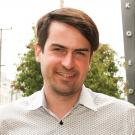
Doug Massey, the Henry G. Bryant Professor of Sociology and Public Affairs at Princeton University’s Woodrow Wilson School of Public and International Affairs, delivered the 2012 Sheffrin Lecture, "The Paradoxical Origins of America's War on Immigrants."
Why does transparency matter? As the so-called "replication crisis" places the methods, measures, and culture of science under ever-greater scrutiny, what can social scientists do to maintain faith in their research?
If a hiker were lost in the backcountry and you were able to rescue them, would you feel morally obligated to do so? Would the hiker be similarly obliged to take adequate precautions against getting lost?
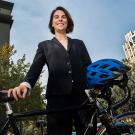
In recently published research, Assistant Professor of Philosophy Tina Rulli grapples with the ethics of risk and rescue, and their implications for public policy.
On the eve of its winter 2016 keynote event, we look at the interdisciplinary work of the Mellon Initiative in Comparative Border Studies at UC Davis.
As the only program of its kind in the UC system, the Comparative Border Studies initiative seeks to challenge the ways in which borders have shaped our thinking about them. Co-directors Sunaina Maira (professor of Asian American studies) and Robert Irwin (professor of Spanish and Portuguese and chair of Cultural Studies) want to explore border/ing e
Jorge Peña, an assistant professor of communication, has recently been teaming up with researchers across disciplines to observe the impact that virtual experiences, which includes playing video games, can have on people in the real world.
Here is Peña discussing some of his recent work and what they tell us about opportunities for the future.
Security on the web has as much to do with the programmers writing code as it does with firewalls and virus protection. Linguistics Associate Professor Raúl Aranovich studies language structure and theory, and is working on a project for the National Science Foundation that could identify programmers most likely to write vulnerable code.
Last year, Aranovich won funding to lead a collaboration with UC Davis computer scientists P. T. Devanbu and V.
Children whose parents are in prison have worse health, poorer school performance and are at a greater risk for depression, anxiety, asthma and HIV/AIDS, according to a policy brief released by the Center for Poverty Research at UC Davis.
In 2010, an estimated 2.7 million children, and one in nine African American children, had an imprisoned parent.
UC Davis anthropology professor Monique Borgerhoff Mulder and students in her spring 2015 Anthropology 103H class write about the dam's ramifications for local communities.
The Gibe III dam sits on the Omo River, 300km southwest of Addis Ababa, Ethiopia's capital. A designated UNESCO World Heritage site, the Lower Omo Valley is home to five national parks and over 200,000 people. Scholars predict that the dam and its associated plantations will have catastrophic effects for these citizens.
Belinda Martineau, a former genetic engineer and UC Davis Institute for Social Sciences (ISS) grant writer, was one of four experts invited by the UC Global Food Initiative to participate in a panel discussion, "GMOs: All Facts, No Fiction,” on two consecutive evenings at UC Davis and UC Riverside in November 2015. In a follow-up interview, Ben Hinshaw of ISS talked to Martineau about her background in GE food and her thoughts on what consumers deserve to know.
Since the 1950s, the study of Spanish colonial art has fallen out of favor among art historians inclined to view colonial paintings as merely "slavish" reproductions of European originals. But Almerindo Ojeda, professor of linguistics at UC Davis and director of the Project on the Engraved Sources of Spanish Colonial Art (PESSCA), disagrees. Rejecting what he calls an "inferiority complex among colonial historians," Ojeda sees important stories embedded in colonial paintings — stories that deserve to be told.